

Best Platinum Camper Trailers for Beach Camping in Australia
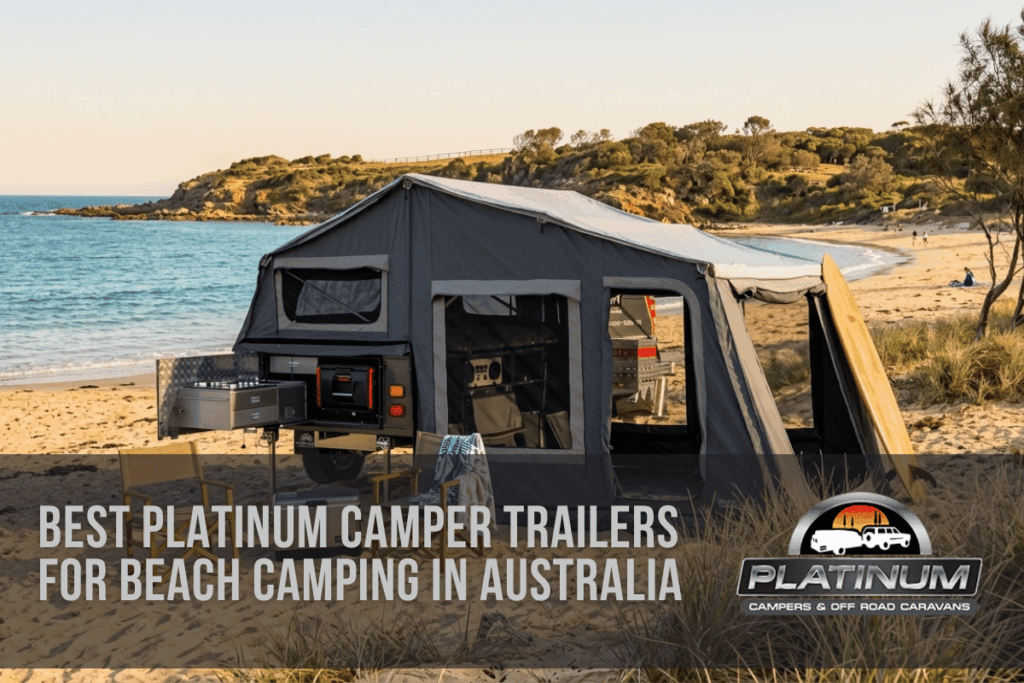
Australia’s coastline stretches over 25,000 kilometres, offering countless beach camping destinations from Fraser Island to Cape Leveque. The right camper trailer transforms a coastal trip from stressful to seamless. This guide identifies the best Platinum Campers models engineered specifically for sand, salt air, and the unique demands of Australian beach camping. Overview Beach camping requires more than standard off-road capability. Soft sand, salt corrosion, tidal access windows, and remote locations demand specific trailer features. We break down which Platinum Campers models excel in coastal conditions, what features matter most for beach towing, and how to choose the right setup for your beach adventures. Key Takeaways Why Beach Camping Demands Specialist Camper Trailers Standard camper trailers struggle in coastal environments. According to Queensland Parks and Wildlife Service, approximately 40% of beach access tracks in Queensland require high-clearance, off-road capable vehicles and trailers. Soft sand reduces traction by up to 50% compared to hard-packed surfaces, making weight and tyre selection critical factors. Salt spray accelerates corrosion rates by 5-10 times compared to inland conditions. The Australian Bureau of Meteorology notes that coastal humidity regularly exceeds 70%, creating perfect conditions for rust and canvas mould. Your camper trailer needs to handle these realities or face expensive repairs. Beach camping sites often sit kilometres from sealed roads. Remote locations like Cable Beach in Western Australia or the Coorong in South Australia require fully self-sufficient setups. The best beach camper trailers combine lightweight construction, robust suspension, ample storage for recovery gear, and reliable 12V systems. Top Platinum Camper Trailers for Beach Camping Chase S5: Best for Couples and Solo Beach Campers The Chase S5 rear fold camper ranks as the top choice for beach-focused couples. Its compact design and lightweight construction make it ideal for soft sand driving where every kilogram matters. Key beach camping features: The Chase S5 works particularly well at drive-on beach destinations like Bribie Island and Rainbow Beach. Its quick setup proves invaluable when arriving at sunset after a long beach drive. For a detailed comparison with similar models, see our Chase S5 vs Quest S4 guide. Warrior S4: Best for Hardcore Off-Road Beach Access The Warrior S4 step-through camper handles the most demanding beach access tracks. Its robust construction and off-road engineering suit experienced beach campers who venture beyond maintained areas. Key beach camping features: The Warrior S4 excels at remote destinations like the Kimberley coastline or Cape York’s eastern beaches. Its durability handles the punishing conditions where access tracks cross creeks, climb dunes, and traverse rocky headlands. Chariot E1: Best for Families Beach Camping The Chariot E1 double fold camper provides maximum space for families with children. Its dual-fold system creates a generous living area that makes extended beach holidays comfortable. Key beach camping features: Families spending a week at destinations like Moreton Island or Coffin Bay benefit from the Chariot E1’s space. The extra room means less gear shuffling and more time enjoying the beach. Learn more about fold style differences to understand why dual-fold works well for larger groups. Cadet SE: Best Budget Beach Camper The Cadet SE soft floor camper delivers beach capability at an accessible price point. As one of the best camper trailers under $20,000, it opens beach camping to budget-conscious adventurers. Key beach camping features: The Cadet SE works well for day-accessible beaches where extreme off-road capability isn’t required. Popular destinations like Noosa North Shore or Pebbly Beach suit this entry-level option perfectly. Beach Camping Model Comparison Feature Chase S5 Warrior S4 Chariot E1 Cadet SE Best For Couples Serious off-roaders Families Budget buyers Floor Type Hard floor Soft floor Hard floor Soft floor Setup Time 5 minutes 10-15 minutes 8-10 minutes 10-15 minutes Sand Performance Excellent Excellent Good Good Living Space Compact Moderate Large Compact Price Range Mid Mid Higher Entry Essential Features for Beach Camper Trailers Suspension and Ground Clearance Independent trailing arm suspension outperforms leaf spring setups on soft sand. Research from 4WD Australia magazine shows that independent suspension reduces tyre dig-in by approximately 30% compared to rigid axle designs. Every Platinum Campers model features independent suspension as standard. Ground clearance matters when crossing tidal gutters and beach access ramps. Look for minimum 350mm clearance to avoid bottoming out on ruts and sand ridges. Proper hitch setup also affects departure angles on steep beach exits. Towing Weight and Balance Beach driving demands lower tyre pressures, typically 15-18 PSI. At these pressures, tyre load capacity drops significantly. The Australian Tyre Dealers Association recommends reducing speeds by 30% and loads by 20% when running beach pressures. Lighter trailers perform better in sand. They require less momentum to maintain progress and recover more easily from bogs. Understanding towing capacity and weights helps you match your vehicle to the right trailer. Corrosion Resistance Salt air attacks exposed metal within hours. Platinum Campers use galvanised and powder-coated components that resist coastal conditions far longer than untreated steel. Post-trip freshwater rinses remain essential for longevity. Regular servicing should increase to every 6 months for campers used frequently in coastal environments. Pay particular attention to bearings, brakes, and electrical connections where salt intrusion causes most damage. Beach Camping Preparation Tips Before You Go Complete a thorough pre-trip inspection before any beach trip. Check brake controllers, wheel nut tension, and tyre condition. Pack recovery gear including rated recovery points, a snatch strap, and tyre deflators. Ensure your 12V system can handle extended stays without shore power. Solar panels prove invaluable at remote beach sites where you may camp for several days. Post-Trip Care Rinse the entire camper with fresh water immediately after leaving the beach. Pay attention to suspension components, brake drums, and any exposed metal. Open canvas sections to air out and prevent mould growth in the humid post-beach period. Frequently Asked Questions What tyre pressure should I run for beach camping? Most beach driving requires 15-18 PSI depending on sand conditions and load. Always re-inflate to highway pressures before returning to sealed roads. Carry a quality air compressor rated for multiple tyre inflations. Can soft
Entry-Level vs Premium Camper Trailers: How to Decide What You Actually Need
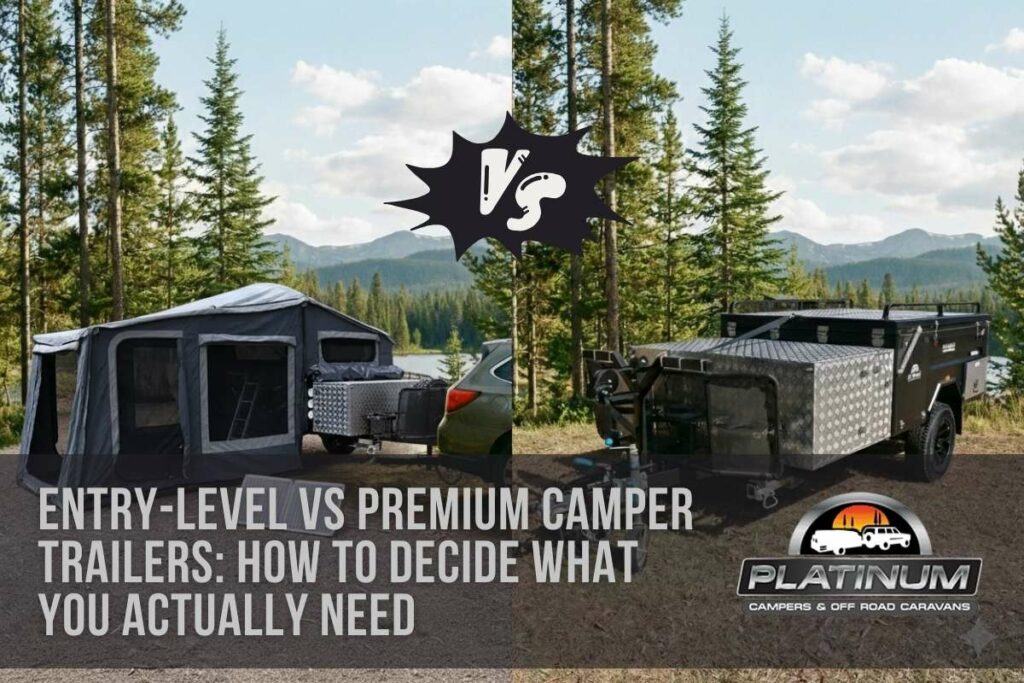
Overview Choosing between an entry-level and premium camper trailer comes down to understanding your camping frequency, trip duration, terrain demands, and long-term goals. This guide breaks down the key differences between budget-friendly and feature-rich camper trailers, helping you invest wisely without overspending or underbuying. You’ll learn what features matter most at each price point, who each category suits best, and how to match your purchase to your actual camping lifestyle. Key Takeaways What Defines Entry-Level Camper Trailers Entry-level camper trailers typically range from $10,000 to $18,000 and prioritise essential functionality over luxury features. These models deliver reliable shelter, basic kitchen setups, and adequate storage for weekend getaways and shorter trips. Soft floor camper trailers dominate this category, offering lightweight construction that suits smaller tow vehicles and first-time towers. The Cadet SE exemplifies quality entry-level design—spacious canvas accommodation, practical storage, and genuine off-road capability without unnecessary complexity. Models like the General S4 add step-through accessibility and enhanced storage while remaining firmly in the accessible price range. Entry-level doesn’t mean poor quality. Australian-designed campers in this bracket feature galvanised steel chassis, durable canvas, and components built for local conditions. The difference lies in feature density rather than fundamental build quality. You’ll find simpler 12V systems, manual rather than gas-strut assisted setups, and standard rather than upgraded suspension components. What Premium Camper Trailers Offer Premium camper trailers ($25,000 and above) incorporate advanced features that enhance comfort, durability, and capability. These models suit frequent campers, extended travellers, and those tackling demanding terrain. Hard floor camper trailers and hybrid models like the Commander represent this category’s pinnacle. Premium features include independent trailing arm suspension for superior off-road performance, heavy-duty chassis construction, integrated hot water systems, larger battery capacity, and comprehensive solar setups. Models like the Chariot E1 demonstrate how dual-fold designs maximise living space—understanding forward, rear, and dual-fold configurations helps identify which premium features match your needs. The Discovery E1 showcases family-oriented premium design with generous internal space and quick setup systems. Premium construction also means superior long-term durability—heavier gauge steel, reinforced stress points, and components rated for tens of thousands of kilometres on corrugated tracks. Matching Your Camping Style to Your Budget Occasional Weekend Campers If you camp 4–8 times yearly at established campgrounds or easy-access bush sites, entry-level campers deliver excellent value. You’ll enjoy proper shelter, comfortable sleeping, and convenient cooking without paying for capability you won’t use. The best camper trailers under $20,000 provide everything occasional campers genuinely need. Regular Family Campers Families camping monthly or during every school holiday benefit from mid-range to premium features. Family-focused camper trailers with dedicated kids’ room options justify higher investment through daily comfort improvements that compound across dozens of trips. Quick setup systems save precious holiday time, while larger kitchens and storage accommodate family logistics. Off-Road and Remote Adventurers Tackling the Gibb River Road, Cape York tracks, or extended outback touring demands premium construction. Capable off-road campers feature reinforced chassis, independent suspension, stone guards, and underbody protection that entry-level models lack. This isn’t about luxury—it’s about returning home with your camper intact. Understanding towing weights and capacity becomes critical when selecting off-road capable models. Extended Travellers Multi-week or lap-around-Australia trips demand premium investment. Living in your camper for extended periods requires larger water capacity, robust electrical systems, comfortable sleeping, and durable construction that handles daily setup cycles. The Commander Hybrid bridges camper trailer agility with caravan-like amenities for serious touring. The Real Cost Difference: Beyond Purchase Price Sticker price tells only part of the story. Genuine ownership costs include insurance, registration, maintenance, repairs, and potential upgrades. Camper trailer insurance costs scale with value, though premium models often include features (like better security) that offset increases. Entry-level campers may require aftermarket additions—accessories and add-ons like solar panels, upgraded batteries, or annexes that premium models include standard. Calculate total equipped cost rather than base price when comparing. Similarly, regular servicing requirements and maintenance routines apply across all price points, premium construction simply tolerates more punishment between services. Resale value favours quality. Well-maintained premium campers from reputable manufacturers retain value better than budget alternatives. If you plan to upgrade later, buying quality initially often costs less than trading up from an entry-level model within a few years. Key Features Worth Paying Extra For Certain premium features deliver outsized value depending on your use case. Independent suspension transforms corrugated track comfort and protects trailer contents—worthwhile for any regular off-road use. Integrated hot water systems elevate camping comfort dramatically for families and extended travellers. Quick-setup mechanisms matter enormously when you’re setting up camp tired after long driving days—fast-setup designs justify premium pricing through accumulated time savings. Electrical capacity increasingly differentiates price brackets. Basic 100Ah systems suit weekend use; extended travel demands 200Ah+ capacity with proper DC-DC charging and solar integration. Canvas quality affects longevity significantly—premium ripstop canvas with quality waterproofing outlasts budget materials by years with propercanvas maintenance. Features You Might Not Need Not every premium feature suits every camper. Maximum off-road specification adds weight and cost unnecessary for bitumen-and-gravel travellers. Oversized water tanks increase tare weight without benefit if you camp near facilities. Complex electrical systems require maintenance knowledge—simpler setups suit those preferring straightforward camping. Before paying premium prices, honestly assess your typical trips. Caravan park campers don’t need expedition-grade construction. Solo or couple travellers rarely require family-sized models—the best campers for couples and compact camper trailers often represent smarter purchases than larger alternatives. Making Your Decision: A Practical Framework Apply these questions to clarify your genuine needs: How often will you camp? Under 6 trips yearly favours entry-level; 10+ trips annually justifies premium investment. What terrain will you tackle? Highway and graded roads suit entry-level; regular corrugated tracks or 4WD-only access demands premium suspension and construction. How long are your typical trips? Weekend warriors need less; multi-week travellers benefit from premium comfort and capacity. What’s your towing situation? Lightweight campers for smaller vehicles exist at both price points, but your vehicle’s limits may dictate category. Are you likely to upgrade? If you’ll outgrow entry-level within 2–3 years,
Camper Trailer vs Roof Top Tent: Which Is the Better Long-Term Investment?
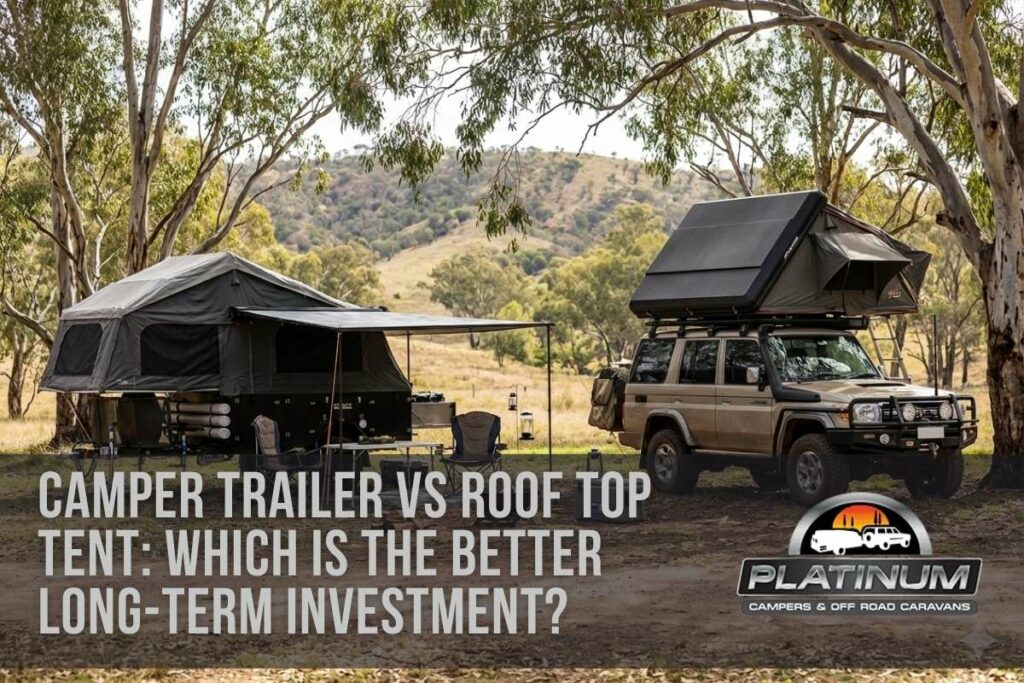
Introduction Choosing between a camper trailer and a roof top tent (RTT) is one of the most common decisions Australian adventurers face. Both options promise freedom on the road, but they differ significantly in cost, comfort, convenience, and long-term value. For families, couples, and solo travellers weighing up their next camping purchase, understanding these differences is essential to making a decision you won’t regret years down the track. This guide compares camper trailers and roof top tents across the factors that matter most, upfront costs, ongoing expenses, setup convenience, comfort, durability, and resale value. Whether you’re exploringQueensland’s best campsites or tackling remote outback tracks, you’ll discover which option delivers the best return on your investment. Overview This article covers the key differences between camper trailers and roof top tents, including initial purchase costs, total cost of ownership, setup and pack-down times, living space and comfort, off-road capability, storage solutions, and long-term resale value. By the end, you’ll have a clear picture of which option aligns with your camping style, budget, and future plans. Key Takeaways What Is a Roof Top Tent? A roof top tent mounts directly onto your vehicle’s roof rack, folding out to create a sleeping platform elevated off the ground. RTTs gained popularity for their simplicity, drive to camp, unfold, and sleep. They range from basic manual-fold designs to elaborate hardshell units with built-in mattresses. Most RTTs accommodate two adults comfortably, though family-sized versions exist at premium prices. The appeal lies in their compact nature when folded and the speed of basic deployment. However, RTTs permanently occupy your roof space, affect vehicle handling, and provide sleeping quarters only; cooking, storage, and living areas require separate solutions. What Is a Camper Trailer? A camper trailer is a purpose-built, towable unit designed for comfortable outdoor living. Australian camper trailers come in several configurations, including soft floor and hard floor models, each engineered to handle Australian conditions. Options range from compact rear-fold designs like the Chase S5 to spacious double-fold models like the Chariot E1. Camper trailers integrate sleeping quarters, kitchens, storage systems, and often annexes into one package. Understanding the differences between forward-fold and rear-fold designs helps buyers match features to their needs. Upfront Cost Comparison Initial purchase price often drives buying decisions, though it tells only part of the story. Entry-level roof top tents start around $800-$1,500, with quality hardshell units ranging from $2,500-$6,000. Premium RTTs with accessories can exceed $8,000. Camper trailers represent a larger initial investment. Quality soft floor models start under $15,000, whilecapable hard floor campers are available under $20,000. Premium models with full off-road capability and comprehensive features range from $20,000-$40,000+. However, this higher entry point includes integrated kitchens, storage, sleeping systems, and often 12V electrical setups, components RTT owners must purchase separately. When calculating true upfront costs, RTT buyers should add roof rack upgrades ($500-$2,000), awnings ($400-$1,500), portable fridges ($600-$2,000), cooking equipment ($300-$800), and storage solutions ($200-$500). These additions narrow the gap considerably, often bringing total RTT setup costs to $5,000-$12,000. Total Cost of Ownership Over 5-10 Years Long-term value emerges when examining costs across typical ownership periods. Beyond purchase price, both options incur ongoing expenses that affect their true investment value. Roof top tent running costs include replacement mattresses and covers every 3-5 years ($200-$500), potential roof rack maintenance or replacement, and increased fuel consumption due to aerodynamic drag and added weight. The constant roof load also accelerates wear on vehicle suspension components. Most RTT owners report 5-15% increases in fuel consumption, which compounds significantly over thousands of kilometres. Camper trailer ownership involvesregular servicing, typically annual wheel bearing checks, brake inspections, and canvas treatment. These services cost $150-$400 annually depending on usage intensity.Canvas maintenance every few years adds $100-$300. Registration andinsurance costs typically run $300-$600 annually. Crucially, camper trailers disconnect from your vehicle between trips, preserving your car’s roof, suspension, and fuel efficiency for daily driving. This separation also means your vehicle remains fully functional while the camper undergoes maintenance or modifications. Setup Time and Convenience Time at camp matters, especially after long drives. RTT manufacturers often claim 30-second setup times, which applies only to unfolding the tent itself. Practical setup, including deploying ladders, arranging bedding, setting up awnings, organising cooking equipment, and establishing a functional camp, typically takes 15-30 minutes. Modern camper trailers have dramatically reduced setup times. Quick-setup designs can be camp-ready in under 5 minutes for basic overnight stops. Understanding realistic setup expectations helps buyers compare fairly. Rear-fold models like the Quest E1 excel at rapid deployment, while larger family setups with full annexes take longer but deliver substantially more living space. Pack-down reveals greater differences. RTTs require removing and stowing all bedding before folding, problematic with damp sleeping bags or when departing early. Camper trailers allow quick pack-down with bedding remaining in place, ready for the next night’s camp. Comfort and Livability Comfort directly affects how often you’ll actually use your investment. RTTs provide elevated sleeping platforms that keep you off the ground and away from crawling insects. However, sleeping space is typically confined to the tent footprint, with limited headroom and no weather-protected living area beneath. Rainy days expose RTT limitations severely. Cooking under a vehicle awning while sleeping quarters remain inaccessible creates frustrating camping experiences. Temperature control proves challenging without insulated walls, and noise from wind and rain directly impacts sleep quality. Camper trailers deliver ground-level living with integrated features that transform camping comfort. Built-in kitchens with proper benchtops, quality accessories, and weather-protected cooking areas make meal preparation enjoyable regardless of conditions. Models offering kids’ rooms turn family camping into practical adventures rather than endurance tests. For couples specifically, compact camper trailers designed for two offer the ideal balance of simplicity and comfort without excess bulk. Storage and Organisation Storage capacity profoundly affects camping enjoyment and trip duration capability. RTT setups scatter gear across vehicle interiors, external boxes, and improvised solutions. Accessing buried equipment becomes a frustrating exercise, and load security requires constant attention. Camper trailers provide dedicated, organised storage solutions purpose-built for camping equipment.
What Does It Really Cost to Own a Camper Trailer? A Complete Breakdown
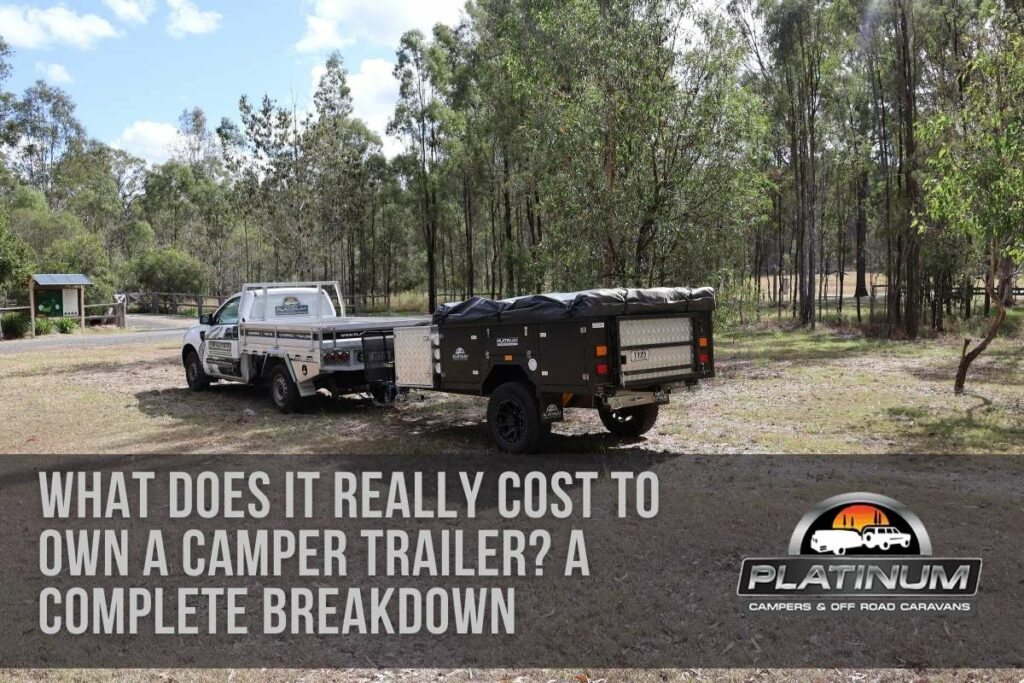
Buying a camper trailer is exciting, but the purchase price is just the beginning. Understanding the full cost of ownership helps you budget accurately, avoid surprises, and make a confident decision about which camper suits your lifestyle and finances. Many first-time buyers focus solely on the sticker price, only to discover ongoing expenses they hadn’t considered. The good news? Camper trailers remain one of the most cost-effective ways to explore Australia when you factor in accommodation savings and the freedom they provide. This guide breaks down every cost associated with owning a camper trailer, from upfront expenses to annual running costs, so you can plan your investment with complete clarity. Overview This article covers the complete cost of camper trailer ownership including purchase price considerations, finance and interest costs, insurance, registration, servicing and maintenance, storage, accessories and upgrades, and fuel impact. We’ll also examine how these costs compare to alternative holiday options and provide practical tips for minimising ongoing expenses. Key Takeaways Understanding the Upfront Costs The initial investment in a camper trailer extends beyond the advertised price. Planning for these upfront expenses ensures you’re financially prepared from day one. Purchase Price Camper trailer prices in Australia vary significantly based on type, size, features, and build quality. Soft floor camper trailers represent the most affordable entry point, with quality models starting under $10,000. These are ideal for couples or those prioritising lightweight towing and budget-friendly camping. Hard floor camper trailers offer faster setup and more robust construction, typically ranging from $15,000 to $30,000. Models like the Chase S5 and Quest E1 sit in this category, offering excellent value for families seeking durability without excessive cost. Premium options like the Chariot E1 double fold and Commander Hybrid range from $25,000 to $45,000, delivering maximum space, comfort, and off-grid capability for extended adventures. You can explore camper trailers under $20,000 that don’t compromise on quality if budget is a primary concern. Finance Costs Most buyers don’t pay upfront, making finance options an important cost consideration. Interest rates for camper trailer loans typically range from 6% to 12% depending on the lender, loan term, and your credit profile. A $20,000 camper financed over five years at 8% interest adds approximately $4,300 to the total cost, translating to weekly repayments of around $93. Shorter loan terms reduce total interest paid but increase weekly payments. Many buyers find a three to five year term balances affordability with minimising interest costs. Low-deposit options make ownership accessible sooner, though higher deposits reduce ongoing repayments. Registration and Compliance Registering a camper trailer in Australia costs between $200 and $400 annually depending on your state or territory. Queensland registration for a standard camper trailer sits around $280 per year, while New South Wales charges approximately $350. These fees include compulsory third-party insurance (CTP) which covers injury claims but not vehicle damage. New camper trailers come with compliance already sorted, but if purchasing second-hand, budget for a roadworthy inspection ($100–$150) and potential compliance work if modifications have been made. Annual Running Costs Once you’ve purchased your camper, several ongoing costs require annual budgeting. Understanding these helps you plan trips and maintain your investment properly. Insurance Comprehensive camper trailer insurance is essential protection for your investment. Annual premiums typically range from $300 to $800 depending on the camper’s value, your claims history, where you store it, and intended usage. Off-road and remote travel may increase premiums slightly. Insuring your camper trailer covers theft, accidental damage, storm damage, and fire—risks that can result in total loss without adequate cover. You can get a camper insurance quote to understand exact costs for your situation. Most owners find the peace of mind worth the annual premium, particularly when travelling remote areas. Servicing and Maintenance Regular servicing keeps your camper safe, reliable, and protects resale value. Professional servicing typically costs $200 to $500 annually depending on the complexity of your setup and any issues identified. This includes checking bearings, brakes, suspension, electrical systems, and gas fittings. Servicing frequency depends on usage—annual servicing suits occasional campers while frequent off-road users should service every six months or after extended trips. Following proper maintenance practices between services extends component life and catches issues early. Budget additionally for consumable replacements including brake pads ($100–$200 every few years), bearing repacks ($80–$150), tyre replacement ($400–$800 for a set depending on quality), and battery replacement every three to five years ($150–$600 depending on battery type). Canvas Care Canvas maintenance is crucial in Australian conditions where UV exposure, dust, and moisture challenge tent fabric. Annual reproofing costs around $50–$100 for DIY treatment or $200–$400 for professional application. Proper drying before storage and regular cleaning prevents mould growth and extends canvas life significantly. Minor repairs like seam resealing or small patch jobs cost under $100 if addressed promptly. Neglecting canvas care leads to expensive replacements—a full canvas replacement can exceed $2,000—making preventative maintenance highly cost-effective. Storage Where you store your camper significantly impacts annual costs. Home storage is free if you have space, though some councils have restrictions on trailer storage in residential areas. Secure commercial storage facilities charge $50 to $200 monthly ($600–$2,400 annually) depending on location, security level, and whether storage is undercover. Proper camper storage protects your investment from weather damage, theft, and vandalism. Undercover storage commands premium prices but dramatically reduces UV degradation and weather exposure. Many owners find the cost worthwhile for peace of mind and reduced maintenance requirements. Additional Ownership Costs Beyond core running costs, several additional expenses factor into total ownership cost. Accessories and Upgrades Most campers benefit from accessories that enhance comfort, convenience, or capability. Essential additions often include solar panels ($300–$1,000), upgraded battery systems ($500–$2,000 for lithium), annexe extensions ($500–$1,500), and awning walls ($200–$500). View the full range of camper accessories to understand what’s available. Many owners spread accessory purchases over time, adding items as they identify genuine needs through camping experience rather than buying everything upfront. Solar power setups particularly deliver long-term value by enabling free camping and reducing reliance on powered sites.
Dual Fold Camper Trailers: The Space-Saving Solution for Families
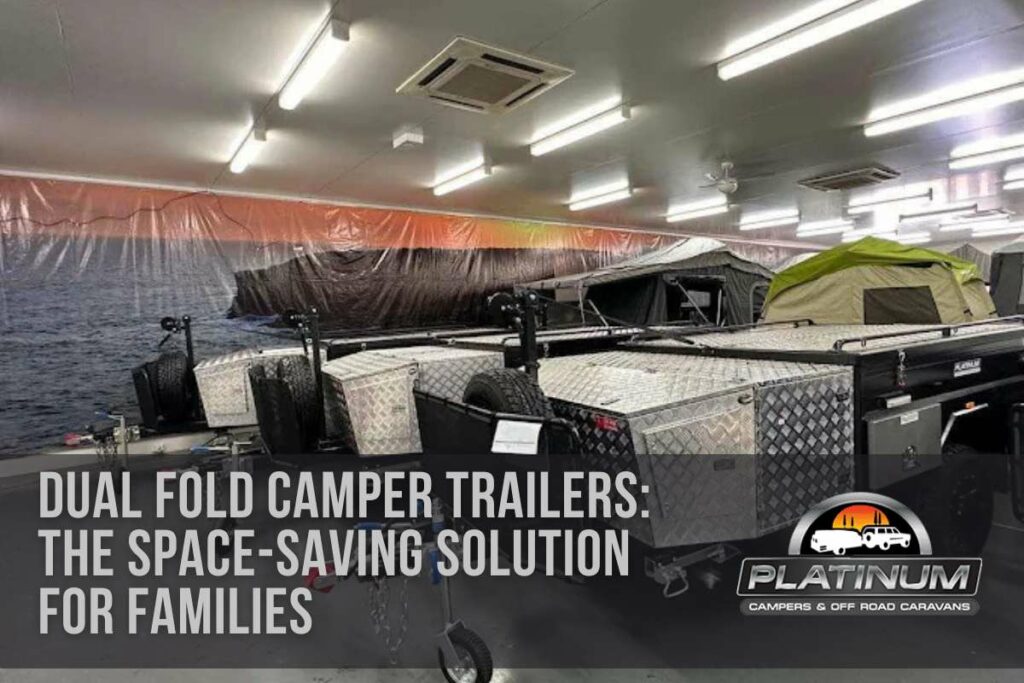
When it comes to family camping adventures across Australia’s diverse landscapes, space is everything. Large families often struggle to find camper trailers that provide adequate living space without compromising on towing capability or setup convenience. Dual fold camper trailers represent the perfect solution, combining innovative design with practical functionality to deliver maximum space efficiency for groups and families. Platinum Campers understands the unique challenges Australian families face when exploring the outback, coastal regions, and national parks. Our dual fold camper trailers, exemplified by the popular Chariot E1, offer unmatched space utilization through their ingenious double-fold system. These campers deliver the living space of a much larger trailer while maintaining compact towing dimensions and quick setup times. Overview This comprehensive guide explores everything you need to know about dual fold camper trailers and their space-saving advantages for family camping. You’ll discover how the innovative dual fold mechanism works, the specific benefits for large families, and why models like the Chariot E1 have become Australia’s preferred choice for group adventures. We’ll also cover essential considerations for selecting the right dual fold camper, financing options, and tips for maximizing your camping experience. Key Takeaways • Dual fold camper trailers provide maximum living space through innovative double-fold tent systems• The Chariot E1 offers sleeping for up to 8 people while maintaining compact towing dimensions• Quick setup times make dual fold campers ideal for frequent travelers and weekend adventurers• Enhanced storage solutions accommodate large family gear requirements• Off-road capability ensures access to remote camping destinations across Australia• Competitive pricing and flexible finance options make family camping more accessible• Comprehensive warranty and support network provide peace of mind for long-term adventures Understanding Dual Fold Camper Trailer Technology What Makes Dual Fold Different Dual fold camper trailers revolutionize space utilization through their innovative tent deployment system. Unlike traditional forward fold vs rear fold camper trailers, dual fold models feature two separate tent sections that unfold in opposite directions from a central chassis. This design creates a significantly larger living area while maintaining the compact towing profile essential for Australian road conditions. The dual fold mechanism typically includes a main sleeping area and a separate annexe or additional sleeping quarters. When deployed, these sections create distinct zones for different family activities—sleeping, dining, relaxation, and storage. This separation is particularly valuable for families with teenagers or multi-generational groups who need privacy and personal space during extended camping trips. The engineering behind dual fold systems focuses on structural integrity and weather resistance. Premium materials and robust frame construction ensure the expanded living area remains stable in various weather conditions, from coastal winds to inland storms. The tent fabric is typically made from heavy-duty canvas or ripstop polyester with waterproof coatings and reinforced stress points. The Chariot E1 Advantage Platinum Campers’ Chariot E1 exemplifies the best in dual fold technology, offering a sophisticated balance of space, durability, and convenience. The Chariot’s double-fold system creates an impressive living area that can comfortably accommodate up to 8 people, making it ideal for large families or groups of friends. The main tent area provides spacious sleeping quarters, while the secondary fold creates additional sleeping space or a dedicated social area. The Chariot E1’s setup process is remarkably straightforward despite its complex appearance. The dual fold mechanism uses heavy-duty hinges and support struts that deploy smoothly with minimal effort. Most families can complete the full setup in under 20 minutes, significantly faster than traditional large canvas tents or multiple smaller camping setups. Quality construction ensures the Chariot E1 withstands the demands of regular family use and harsh Australian conditions. The chassis features hot-dipped galvanized steel construction with independent suspension for superior off-road performance. Premium Aussie-made canvas provides excellent durability and weather protection, while reinforced guy ropes and tent poles ensure stability in challenging conditions. Space Maximization Benefits for Families Sleeping Capacity Solutions Large families consistently face the challenge of finding adequate sleeping arrangements when camping. Traditional camper trailers often limit families to 4-5 people, forcing parents to invest in additional tents or accommodation. Dual fold camper trailers eliminate this problem by providing genuine sleeping capacity for 6-8 people within a single, integrated system. The Chariot E1’s dual fold design creates distinct sleeping zones that enhance privacy and comfort. The main tent area typically accommodates parents or couples, while the secondary fold provides separate sleeping quarters for children or additional adults. This arrangement reduces disturbances during the night and allows different family members to follow their preferred sleep schedules. Bed configurations in dual fold trailers are designed for versatility and comfort. Quality innerspring mattresses ensure proper rest for all occupants, while the spacious tent areas accommodate various bed sizes and configurations. Many families appreciate the ability to set up separate children’s areas or create dedicated spaces for teenagers who value their independence during family trips. Storage and Organization Features Effective storage solutions are crucial for family camping success, and dual fold camper trailers excel in this area. The Chariot E1 incorporates extensive storage compartments throughout the chassis, including dedicated areas for clothing, food, camping equipment, and recreational gear. This organized approach eliminates the cluttered camping experience that often plagues large family trips. Internal storage within the tent areas includes overhead pockets, side compartments, and integrated shelving systems. These features keep personal items organized and easily accessible while maintaining the clean, spacious feel that makes camping enjoyable. External storage boxes provide secure space for valuable items like electronics, tools, and emergency supplies. The dual fold design also creates natural organization zones within the expanded living area. Families can designate specific areas for different activities—dining, relaxation, children’s play, and adult conversation. This separation helps maintain order and reduces conflicts over shared space, particularly important during extended camping trips or adverse weather conditions. Practical Advantages of Dual Fold Design Quick Setup and Pack-Down Time efficiency is a critical factor for busy families, and dual fold camper trailers deliver significant advantages in setup speed. The Chariot E1’s engineered deployment system allows even novice campers to establish a complete campsite
How to Check Your Camper Trailer Before Every Trip in 10 Minutes
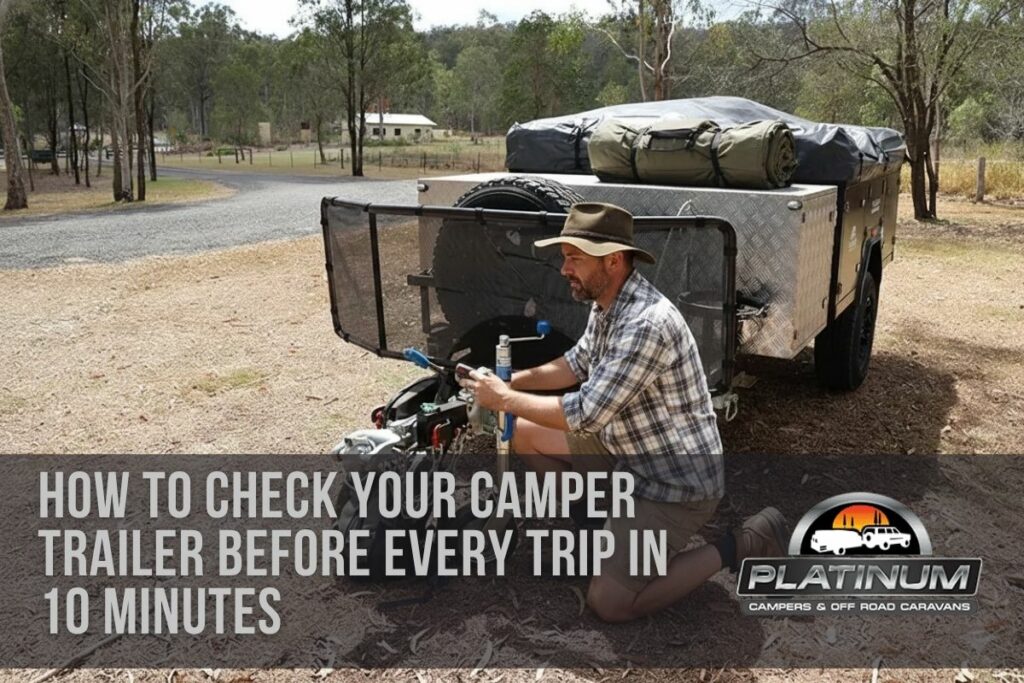
Australian roads are tough on camper trailers, with long distances, changing weather and rough outback tracks putting constant stress on couplings, tyres and running gear. A quick, consistent 10‑minute check before every trip helps avoid breakdowns, improves safety and protects the investment families make in a quality off‑road camper. Platinum Campers are engineered specifically for Australian touring, with strong chassis, off‑road suspension and practical layouts designed for families and adventurers who want to tow with confidence. A simple routine check makes it easier for those strengths to shine on every journey, whether heading for a weekend at the coast or a long‑haul outback trip. This guide explains how to check a camper trailer in just 10 minutes using a structured, front‑to‑back system that anyone can follow. It is tailored for owners of off‑road campers, including the Platinum Campers range, and suits both first‑time buyers and experienced travellers looking for a reliable pre‑trip ritual. Key takeaways Why a 10‑Minute Check Matters in Australia Australian touring often means long stretches between towns, rough corrugations and changing conditions that can expose any weakness in a camper trailer setup. A simple fault such as a loose wheel nut or an under‑inflated tyre can quickly become a major failure when towing at highway speeds or along a rocky track. A short pre‑trip inspection before each journey is not intended to replace professional servicing, but it is highly effective at catching visible problems that appear between service intervals. This is particularly important after travelling on corrugated roads, tackling beach access tracks or returning from a long period of storage. Platinum Campers designs its off‑road camper trailers with Australian conditions in mind, using robust construction, off‑road suspension and quality running gear to handle demanding environments. Owners who adopt a quick pre‑trip routine get more from these design advantages and experience fewer unpleasant surprises on the road. For longer‑term care beyond the 10‑minute routine, Platinum’s maintenance tips for your camper trailer give additional guidance on servicing intervals and component care. The 10‑Minute Pre‑Trip System: Front to Back The easiest way to complete a full check in 10 minutes is to follow a consistent pattern every time. Starting at the towbar, work methodically to the rear of the trailer, then loop back along the other side, checking from the top down at each stop. This system can be broken into five clear stages: tow coupling, safety equipment, wheels and tyres, lights and electrics, and load security. By spending one to two minutes on each area, owners can assess the most important safety factors without needing tools or specialist knowledge. Platinum owners and buyers researching their first camper can also review the camper trailers range to see how different models arrange drawbars, storage and running gear, which makes it easier to create a personal checklist for a specific layout. Step 1: Check the Tow Vehicle and Coupling (About 2 Minutes) The connection between tow vehicle and camper is the single most important safety point in the entire combination. If the coupling is not correctly seated or locked, there is a real risk of trailer separation or unstable towing, especially on rough or uneven roads. Start at the towbar and confirm the towball or off‑road coupling is fully seated with no visible gaps. The latch or handle should be in the locked position, and the safety pin or clip installed through the designated hole so that vibration cannot cause it to release. Next, look at the tow tongue and hitch pin to make sure both are correctly installed and secured with a suitable R‑clip or locking device. A quick attempt to lift the front of the drawbar by hand is a practical way to double‑check that the coupling is properly engaged and not just appearing correct from a distance. Platinum’s focus on off‑road ready drawbars and couplings is evident across the Platinum camper trailers lineup, making it easier for owners to use quality hardware that stands up to the demands of Australian travel. Step 2: Safety Chains, Jockey Wheel and Handbrake (About 2 Minutes) Once the coupling has been confirmed, move directly to the rest of the front‑end safety equipment. Correctly fitted safety chains and properly stowed jockey wheels are essential to safe towing and are legally required on public roads. Check that the safety chains are attached to the towbar using rated shackles, ideally crossed under the drawbar where appropriate so they can support it if the coupling fails. The chains should have enough slack for turning but must not be so long that they can drag on the road or catch on obstacles. Verify that rated D‑shackles are tight and in good condition, without distortion or heavy corrosion. At the same time, inspect the trailer handbrake to ensure it is fully released before departure, because any partial application can overheat brake components within a short distance. Finally, confirm that the jockey wheel is fully raised, locked into its travel position or removed depending on design, and that the clamp is tight so that the wheel cannot rotate down while on the move. This simple step prevents roadside incidents caused by a jockey wheel striking the ground during towing. Platinum’s strong A‑frame and front‑end layout, used throughout the off‑road camper trailers range, helps owners position all of this equipment correctly and safely. Step 3: Wheels, Tyres and Suspension Glance (About 2–3 Minutes) Tyres and running gear are among the most common causes of roadside difficulties for caravans and camper trailers. Under‑inflated tyres, uneven wear, loose wheel nuts and bearing issues can all lead to serious trouble if they go unnoticed before a drive. Walk around the camper and look closely at each tyre, inspecting for visible damage such as cuts, bulges or objects lodged in the tread. Even without a gauge, a firm push or kick on each tyre can offer a basic feel for whether it is properly inflated, but using a pressure gauge whenever time permits is strongly recommended. Next, scan each wheel for missing or potentially
Why Brisbane Is the Best Place to Start Your Camper Trailer Journey
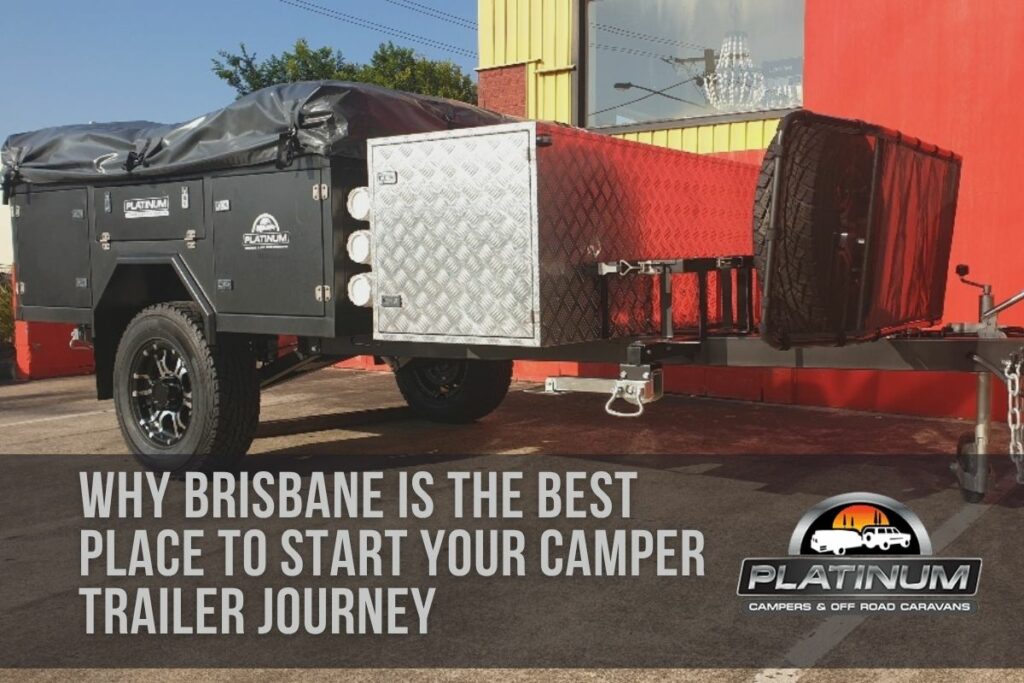
Introduction Brisbane stands as Australia’s gateway to some of the continent’s most spectacular camping destinations, making it the ideal launching point for your camper trailer adventure. With its strategic location, year-round camping climate, and comprehensive support infrastructure, Queensland’s capital city offers everything you need to begin your journey confidently and comfortably. Whether you’re a first-time camper looking to explore Australia’s natural wonders or an experienced adventurer planning your next epic journey, Brisbane provides unparalleled access to diverse landscapes, expert guidance, and quality equipment. Platinum Campers’ Brisbane showroom serves as your trusted partner, offering premium camper trailers designed specifically for Australian conditions and comprehensive support to ensure your adventure exceeds expectations. Overview This comprehensive guide explores why Brisbane represents the optimal starting point for camper trailer adventures across Australia. We’ll examine Brisbane’s strategic advantages, from its central location providing access to beaches, mountains, and outback destinations, to its robust infrastructure supporting camper trailer preparation and maintenance. You’ll discover how Brisbane’s climate, amenities, and proximity to diverse terrains create the perfect environment for both planning and launching successful camping expeditions. Additionally, we’ll cover the practical benefits of starting your journey from Brisbane, including access to quality equipment, expert advice, financing options, and comprehensive after-sales support that ensures your investment delivers years of memorable adventures. Key Takeaways • Strategic Location: Brisbane offers unmatched access to beaches, mountains, rainforests, and outback destinations within driving distance• Year-Round Climate: Ideal weather conditions for camping adventures across multiple seasons• Infrastructure Excellence: Comprehensive support network for camper trailer sales, service, and preparation• Diverse Destinations: Access to over 50 spectacular camping locations within a day’s drive• Expert Support: Professional guidance from experienced teams familiar with Australian camping conditions• Quality Equipment: Access to premium camper trailers designed and tested for Australian terrain• Financial Flexibility: Comprehensive financing options to make your camping dreams accessible• Community Connection: Vibrant camping community providing advice, support, and shared experiences Brisbane’s Strategic Geographic Advantage Gateway to Australia’s Premier Camping Destinations Brisbane’s location along Australia’s eastern seaboard creates unprecedented access to the continent’s most diverse and spectacular camping destinations. Within a comfortable day’s drive, adventurers can reach pristine beaches stretching from the Sunshine Coast to the Gold Coast, ancient rainforests of the Scenic Rim, and the rugged beauty of the Great Dividing Range. This geographic advantage eliminates the need for extensive travel before reaching your destination, allowing you to maximize time enjoying nature rather than covering distance. Brisbane campers have documented access to over 50 premier camping destinations within a four-hour radius, ranging from beachfront sites perfect for family adventures to challenging 4WD tracks ideal for serious off-road exploration. The city’s position also provides strategic access to Queensland’s iconic destinations including Fraser Island, the Whitsundays, and the Outback, making it possible to plan extended adventures that showcase Australia’s incredible diversity without requiring multiple base camps or complex logistics. Climate Advantages for Year-Round Adventures Brisbane’s subtropical climate delivers ideal conditions for camper trailer adventures throughout the year, with mild winters and warm summers that make camping comfortable across all seasons. This climate stability allows for flexible trip planning without the weather restrictions that limit camping in other regions. The city’s weather patterns provide distinct advantages for different types of adventures. Winter months offer perfect conditions for outback exploration and desert camping, while summer provides ideal beach and coastal camping opportunities. Spring and autumn deliver optimal conditions for mountain and rainforest adventures, ensuring year-round access to diverse experiences. This climate reliability extends to camper trailer maintenance and preparation, with consistent conditions that prevent weather-related wear and ensure your equipment remains in optimal condition between adventures. Infrastructure and Support Excellence Comprehensive Camper Trailer Services Brisbane’s camping industry infrastructure represents Australia’s most comprehensive support network for camper trailer enthusiasts. The city hosts numerous specialized service centers, parts suppliers, and modification specialists who understand the unique demands of Australian camping conditions. Platinum Campers’ Brisbane showroom exemplifies this infrastructure excellence, providing not only premium camper trailers but comprehensive support services including maintenance, modifications, and expert advice. This level of support ensures your camper trailer remains adventure-ready regardless of how challenging your destinations become. The city’s infrastructure also includes specialized camping equipment suppliers, 4WD specialists, and outdoor gear retailers who provide everything needed for successful adventures. This concentration of expertise and equipment availability creates a one-stop environment for complete adventure preparation. Expert Guidance and Professional Support Brisbane’s camping community includes some of Australia’s most experienced adventure specialists who provide invaluable guidance for both new and experienced campers. Professional teams understand local conditions and can provide specific advice about destinations, equipment requirements, and safety considerations. This expertise extends beyond sales to include comprehensive education about camper trailer selection, maintenance, and optimal usage. Whether you’re considering hard-floor versus soft-floor options or need guidance about essential questions before purchasing your first camper trailer, Brisbane’s expert community provides reliable, experience-based advice. The professional support network also includes specialized services for first-time towers and comprehensive guidance about what to pack for your first camper trailer trip, ensuring every adventure begins with confidence and proper preparation. Access to Diverse Adventure Opportunities Coastal and Beach Camping Excellence Brisbane provides unrivaled access to Australia’s most spectacular coastal camping destinations, from the pristine beaches of Moreton Island to the rugged beauty of the Sunshine Coast hinterland. These destinations offer everything from family-friendly beachfront sites to challenging 4WD beach driving experiences that test both equipment and skills. The proximity of these coastal destinations means Brisbane-based campers can enjoy weekend beach adventures or extended coastal expeditions without extensive travel times. Popular destinations in Brisbane include carefully selected sites that offer both accessibility and natural beauty, ensuring every coastal adventure delivers memorable experiences. Coastal camping from Brisbane also provides opportunities to explore marine environments, practice beach driving skills, and experience the unique challenges and rewards of seaside camping while maintaining easy access to urban amenities when needed. Mountain and Rainforest Adventures The Great Dividing Range and Scenic Rim regions surrounding Brisbane offer spectacular mountain and rainforest camping opportunities that showcase Australia’s incredible biodiversity and natural
The Complete Camper Trailer Pre-Purchase Inspection Checklist
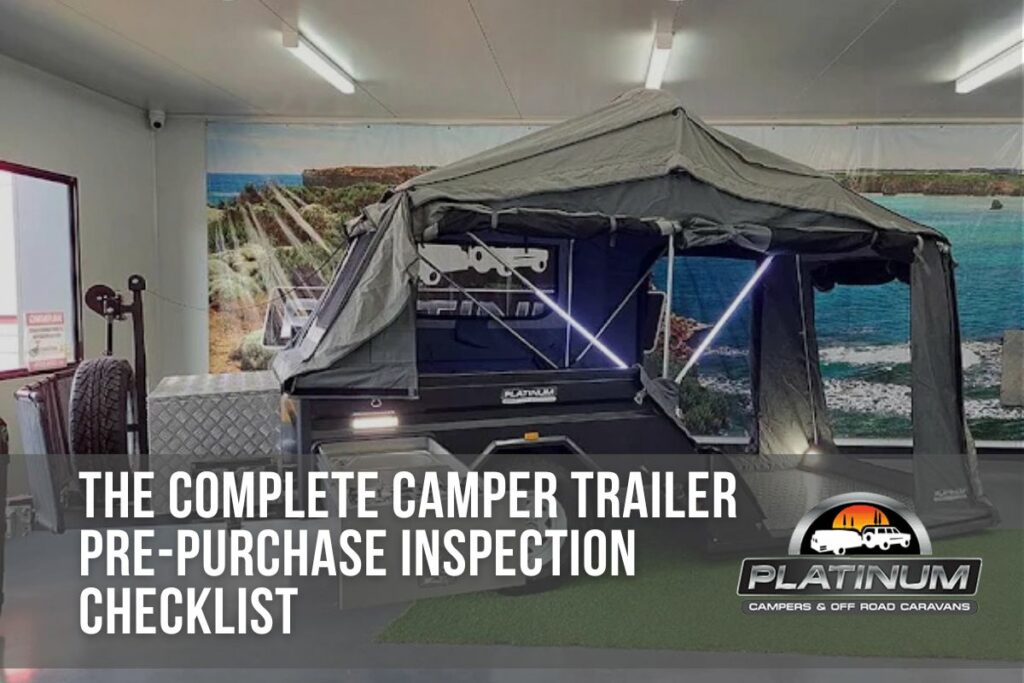
Introduction Purchasing a camper trailer is an exciting step toward countless Australian adventures, but it requires careful inspection to ensure you’re investing in quality, safety, and reliability. Whether you’re considering a brand-new Platinum Campers model or evaluating a used trailer, a thorough pre-purchase inspection protects your investment and ensures years of worry-free camping. This comprehensive checklist covers every critical component, from chassis integrity to electrical systems, helping both first-time buyers and experienced campers make informed decisions. Overview This guide provides a systematic approach to inspecting camper trailers before purchase. You’ll learn how to evaluate structural integrity, mechanical components, safety systems, and interior features. The checklist format makes it easy to follow during your inspection, ensuring nothing important is overlooked. We’ll also cover red flags to avoid and questions to ask dealers or private sellers. Key Takeaways • Always inspect the chassis, suspension, and coupling system for wear and damage• Check electrical systems, brakes, and lights for proper functionality• Examine canvas and seals for deterioration, mold, or repair patches• Verify all appliances, water systems, and gas connections work correctly• Document any issues and factor repair costs into your purchase decision• Understand warranty coverage and after-sales support options Pre-Inspection Preparation Before beginning your inspection, gather essential tools and information to conduct a thorough evaluation. Proper preparation ensures you can identify potential issues and make an informed purchasing decision. Essential Tools for Inspection Bring a flashlight or headlamp for examining dark spaces, a multimeter for testing electrical connections, and measuring tape for verifying dimensions. Pack work gloves for safety when handling components, and consider bringing a magnet to test for steel versus aluminum construction. A smartphone camera helps document any concerns for later review. Research the Model Investigate the specific camper model’s reputation, common issues, and typical pricing before your inspection. Check online forums and reviews for known problems with that particular model or manufacturer. Understanding the trailer’s original specifications helps identify modifications or missing components during your inspection. Our camper trailers buyers guide provides valuable insights into what to look for in different types of campers. Pre-Inspection Checklist ☐ Research model specifications and common issues☐ Gather inspection tools (flashlight, multimeter, measuring tape)☐ Prepare questions about warranty, service history, and inclusions☐ Set realistic budget including potential repair costs☐ Arrange proper lighting for thorough inspection Structural and Chassis Inspection The foundation of any reliable camper trailer lies in its structural integrity. A thorough examination of the chassis, frame, and mounting points reveals the trailer’s overall condition and potential longevity. Chassis and Frame Assessment Examine the main chassis rails for cracks, rust, or previous repair work. Look for straight, solid construction without significant corrosion or damage. Check all mounting points where components attach to the frame, ensuring bolts are tight and mounting brackets show no signs of stress or failure. Inspect the drawbar and A-frame construction for proper alignment and structural soundness. Any bending, cracking, or welding repairs in these critical areas should raise immediate concerns about the trailer’s safety and roadworthiness. Suspension System Evaluation Test the independent suspension by pushing down on each corner of the trailer, checking for proper spring response and smooth operation. Examine shock absorbers for leaks, damage, or excessive wear. Verify that suspension components move freely without binding or unusual noises. Check wheel bearings by grasping each wheel and attempting to rock it horizontally and vertically. Excessive play indicates bearing wear that requires immediate attention. Inspect CV joints and drive components for signs of wear or damage. Structural Inspection Checklist ☐ Chassis rails free from cracks, rust, or damage☐ All mounting points secure with tight bolts☐ Drawbar and A-frame properly aligned and solid☐ Suspension operates smoothly without binding☐ Shock absorbers show no leaks or damage☐ Wheel bearings have minimal play☐ CV joints and drive components in good condition☐ No signs of accident damage or major repairs Coupling and Towing System The coupling system represents your primary connection between vehicle and trailer, making its inspection absolutely critical for safe towing. Proper functionality and maintenance of these components ensures secure attachment and reliable performance on Australian roads. Coupling Mechanism Inspection Examine the coupling head for smooth operation, proper locking mechanism function, and absence of excessive wear. The coupling should engage and disengage easily while maintaining a secure connection. Check for cracks, distortion, or excessive play in the coupling components. Inspect the safety chains and their attachment points for proper rating, secure mounting, and absence of damage. Verify that chains are the correct length and rating for your trailer’s weight. Test the breakaway cable and ensure it’s properly connected to the handbrake system. Jockey Wheel and Stabilizer Assessment Test the jockey wheel for smooth operation, proper support capacity, and secure locking mechanisms. The wheel should raise and lower the trailer easily while maintaining stability. Check for bent components, damaged threading, or inadequate load capacity. Our guide on upgraded jockey wheel hitch explains the importance of quality hitching systems. Examine corner stabilizer legs for proper operation, adequate support, and secure mounting. Each stabilizer should extend and retract smoothly while providing solid support when deployed. Look for bent legs, damaged mounts, or inadequate ground contact pads. Read our tips for using and maintaining your stabiliser legs for proper maintenance guidance. Coupling System Checklist ☐ Coupling head operates smoothly and locks securely☐ Safety chains properly rated and securely mounted☐ Breakaway cable connected and functional☐ Jockey wheel operates smoothly with secure locking☐ Corner stabilizers extend/retract properly☐ All mounting hardware tight and undamaged☐ Load ratings appropriate for trailer weight☐ No signs of excessive wear or damage Electrical and Lighting Systems Reliable electrical systems ensure safe road travel and proper operation of essential trailer functions. A comprehensive electrical inspection prevents dangerous situations and costly repairs down the road. Lighting System Verification Test all external lights including indicators, brake lights, tail lights, and reverse lights if equipped. Each light should illuminate brightly and consistently without flickering or dim spots. Check for proper lens condition, secure mounting, and water-tight seals. Examine the wiring harness for damage, corrosion, or amateur repairs.
Electric Off Road Camper Trailers: Are They Worth the Hype in 2025?
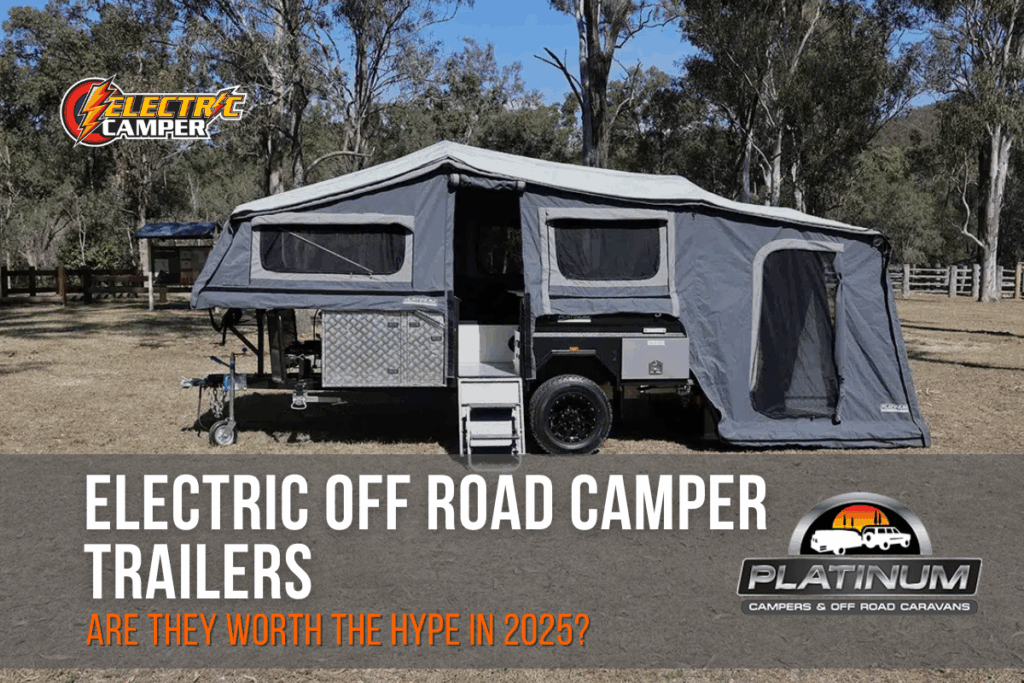
Introduction Electric vehicles are transforming Australian roads, and now electric off road camper trailers are generating significant buzz in the camping community. As environmental consciousness grows and technology advances, many Australian adventurers are questioning whether electric camper trailers represent the future of off-grid camping or simply expensive novelties. With Platinum Campers’ commitment to innovation and robust off-road performance, understanding the practical implications of electric camping technology has never been more important for making informed decisions about your next adventure investment. Overview This comprehensive guide examines the current state of electric off road camper trailers in the Australian market, evaluating their performance capabilities, cost considerations, and practical applications for serious outdoor enthusiasts. You’ll discover the key advantages and limitations of electric camping technology, understand the infrastructure requirements for off-grid adventures, and learn how traditional camper trailers like Platinum Campers’ proven range compare in terms of value, reliability, and real-world performance. We’ll explore financing options, maintenance considerations, and help you determine whether electric technology aligns with your camping goals and budget. Key Takeaways • Electric off road camper trailers offer environmental benefits but face significant infrastructure and cost challenges in Australia• Battery technology limitations currently restrict extended off-grid camping capabilities compared to traditional systems• Initial purchase costs for electric campers are 40-60% higher than comparable traditional models• Charging infrastructure remains limited in remote Australian camping destinations• Traditional camper trailers with solar integration offer proven off-grid reliability at substantially lower costs• Platinum Campers’ established range provides immediate value with tested off-road performance and comprehensive support The Current State of Electric Off Road Camper Trailers in Australia Electric off road camper trailers represent an emerging segment in the Australian camping market, with several manufacturers introducing models designed for environmentally conscious adventurers. These units typically feature large lithium battery banks, electric cooking systems, and integrated solar charging capabilities. However, the technology remains in its early stages, with significant limitations affecting their practical application for serious off-road camping. The Australian market currently offers limited electric camper options, with most models focused on lightweight designs suitable for sealed road camping rather than genuine off-road adventures. Unlike established manufacturers like Platinum Campers, who have decades of experience engineering robust off road camper trailers, electric camper producers often lack the proven track record of handling Australia’s demanding terrain and climate conditions. Most electric campers available in 2025 feature battery capacities ranging from 200-800 amp hours, which sounds impressive but falls short of supporting extended off-grid camping without frequent charging. The reality of powering refrigeration, lighting, water pumps, and other essential systems quickly depletes even large battery banks, particularly in remote locations where solar charging may be insufficient due to weather conditions or tree cover. Performance and Capability Analysis Off-Road Performance Limitations Electric off road camper trailers face several performance challenges that traditional campers handle more effectively. The substantial weight of battery systems significantly increases overall trailer mass, often requiring larger tow vehicles and impacting fuel efficiency. Where a traditional off road camper might weigh 1,200-1,800kg, electric equivalents often exceed 2,000kg due to battery weight alone. The additional weight affects suspension performance, braking distances, and overall handling on challenging terrain. Platinum Campers’ proven designs like the Warrior S4 incorporate independent suspension systems and lightweight construction specifically engineered for Australian off-road conditions, delivering superior performance without the weight penalties of electric systems. Battery protection becomes critical in off-road environments, where vibration, dust, and temperature extremes can damage sensitive electrical components. Traditional campers with proven 12V systems and solar charging offer greater reliability and easier field repairs when problems occur miles from civilization. Power Management Realities Electric camper trailers promise freedom from generators and gas appliances, but the reality of power management often proves more complex than marketing materials suggest. A typical camping setup requires 50-150 amp hours daily for basic needs including refrigeration, lighting, water pumps, and device charging. During poor weather or short winter days, solar charging may provide only 30-50% of required power, creating dependence on shore power or generator backup. Traditional camper systems, like those found in Platinum Campers’ range, combine efficient 12V appliances with proven solar charging and optional generator backup for complete energy independence. Gas refrigeration and cooking systems eliminate the largest power consumers, extending battery life for essential electronics and lighting. The complexity of electric systems also increases potential failure points, with sophisticated battery management systems, inverters, and charging controllers requiring specialized knowledge for troubleshooting. When problems occur in remote locations, traditional gas and 12V systems offer simpler solutions and more readily available replacement parts. Cost Analysis: Initial Investment and Ongoing Expenses Purchase Price Comparison Electric off road camper trailers typically cost 40-60% more than comparable traditional models, with entry-level units starting around $45,000-60,000 compared to well-equipped traditional campers in the $25,000-35,000 range. This significant price difference reflects the cost of large lithium battery systems, sophisticated charging equipment, and the smaller production volumes of electric manufacturers. Platinum Campers offers exceptional value with proven models starting well under $20,000, providing immediate access to quality off-road camping without the premium associated with unproven electric technology. The substantial cost savings can fund years of camping adventures, fuel, and upgrades while you enjoy proven reliability and performance. When considering finance options, the higher purchase price of electric campers significantly increases monthly payments and total interest costs over the loan term. Traditional campers offer more accessible financing with lower monthly commitments, making quality camping accessible to more Australian families. Operational and Maintenance Costs While electric proponents highlight reduced fuel costs for generators and gas appliances, the savings often prove minimal compared to the higher purchase price and specialized maintenance requirements. Lithium batteries typically require replacement every 8-12 years at costs ranging from $8,000-15,000, representing a significant ongoing expense rarely mentioned in marketing materials. Electric systems require specialized technicians for repairs and maintenance, with limited service networks outside major cities. Traditional camper systems can be serviced by any competent automotive or RV technician, with widely available parts and lower labor costs. Platinum Campers’ comprehensive warranty and support network ensures reliable
Best Hybrid Camper for a Family of 4: What to Know Before You Buy
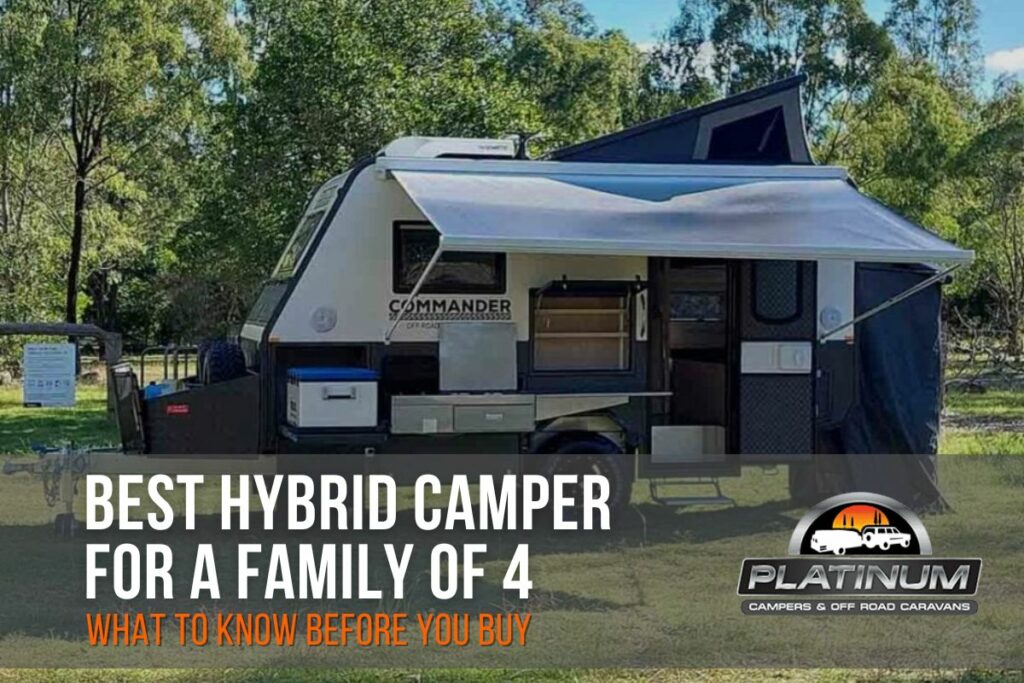
Choosing the perfect camper trailer for your family of four is one of the most important decisions you’ll make for your Australian camping adventures. While traditional soft floor and hard floor campers offer excellent value, hybrid camper trailers have emerged as the ideal solution for families seeking the perfect balance of comfort, space, and off-road capability. Platinum Campers’ Commander Hybrid represents the pinnacle of Australian-designed family camping solutions, combining the comfort of a caravan with the agility and durability of a rugged camper trailer. For families navigating Australia’s diverse terrain—from coastal beaches to remote outback tracks—a hybrid camper offers unmatched versatility. These innovative trailers provide the sleeping space and amenities your family needs while maintaining the off-road performance that traditional caravans simply cannot match. Overview This comprehensive guide explores everything Australian families need to know about hybrid campers, focusing on the unique needs of four-person families. You’ll discover why hybrid designs excel in Australian conditions, how to evaluate space requirements, setup considerations, and the long-term value proposition. We’ll examine Platinum Campers’ Commander S2 in detail, compare it with traditional camping options, and provide expert guidance on financing, customization, and after-sales support. Whether you’re upgrading from tent camping or considering your first family camper investment, this article provides the knowledge needed to make an informed decision that will serve your family for years of memorable Australian adventures. Key Takeaways • Hybrid campers offer the perfect balance of space, comfort, and off-road capability for families of four • The Commander S2 provides sleeping for up to six people with robust construction for Australian conditions • Setup time averages 15-20 minutes, significantly faster than traditional soft floor campers • Hybrid designs offer better weather protection and interior comfort than conventional camper trailers • Investment costs are competitive with premium hard floor campers while offering superior space and amenities • Australian-built construction ensures parts availability and local support networks • Flexible financing options make hybrid campers accessible for most family budgets Understanding Hybrid Camper Trailers What Makes a Hybrid Camper Different Hybrid camper trailers represent a revolutionary approach to family camping, combining the best elements of caravans and traditional campers. Unlike conventional camper trailers that rely entirely on canvas or hard floor popup systems, hybrids feature a solid, weatherproof cabin section with additional expandable sleeping areas. The key innovation lies in their construction: a permanent hard-wall section houses the kitchen, dining area, and storage, while slide-out beds or popup sections provide additional sleeping space. This design eliminates many of the weather-related challenges associated with traditional canvas campers while maintaining the compact towing profile that makes off-road adventures possible. For Australian families, this hybrid approach addresses the unique challenges of our diverse climate conditions. The permanent cabin section provides a secure retreat during sudden weather changes, while the expandable sections offer the space needed for comfortable family living. Key Advantages for Families Superior Weather Protection: The solid cabin construction offers unparalleled protection from Australia’s unpredictable weather conditions. Rain, wind, and even extreme heat become manageable when your family has a secure, weatherproof living space. Enhanced Security: Unlike traditional canvas campers, the hard-wall section provides genuine security for valuables and peace of mind when camping in unfamiliar locations or leaving the campsite for day trips. Increased Comfort: Permanent fixtures like proper seating, dining tables, and kitchen facilities create a home-like environment that keeps families comfortable during extended camping trips. Versatile Sleeping Arrangements: Most hybrid campers accommodate 4-6 people with various bed configurations, making them perfect for families with children of different ages or those who frequently camp with guests. Faster Setup Times: While offering more space than traditional campers, hybrids typically setup in 15-20 minutes—significantly faster than soft floor alternatives and comparable to hard floor campers. Why Hybrid Campers Excel for Families of Four Space Optimization and Layout Design The genius of hybrid camper design lies in how efficiently they utilize available space. For a family of four, space isn’t just about square footage—it’s about creating distinct areas for different activities while maintaining an open, comfortable feel. The Commander Hybrid exemplifies this principle with its thoughtful layout. The main cabin provides a central living area where the family can gather for meals, games, or simply relaxing during poor weather. The kitchen area includes full-sized appliances and ample counter space, allowing parents to prepare proper meals rather than relying solely on camp cooking. Separate sleeping areas are crucial for family harmony on extended trips. Parents need private space, while children benefit from their own sleeping area. Hybrid designs typically feature a permanent double bed in the main cabin plus additional beds in slide-out or popup sections, creating the perfect configuration for most four-person families. Storage Solutions for Extended Adventures Australian family camping often involves extended trips covering vast distances. This creates unique storage challenges that hybrid campers address more effectively than other designs. The permanent cabin section provides secure internal storage for clothing, electronics, and valuable items. External storage remains easily accessible for camping gear, while internal cupboards and wardrobes keep family belongings organized and protected. Many hybrid models include specialized storage for children’s toys and games—often overlooked but essential for maintaining family harmony during long trips. The Commander S2 includes strategically placed storage throughout the unit, from overhead lockers to under-bed compartments. This comprehensive storage system means families can pack for comfort rather than making difficult choices about what to leave behind. Climate Control and Comfort Features Australia’s climate extremes demand campers that can handle everything from tropical humidity to desert heat and mountain cold. Hybrid campers excel in this area through their superior insulation and climate control options. The solid construction of the main cabin allows for effective insulation, making heating and cooling more efficient and comfortable. Windows and ventilation can be strategically placed to maximize airflow while maintaining weather protection. For families with young children, consistent comfortable temperatures aren’t just luxury—they’re essential for good sleep and happy campers. The Commander S2‘s design facilitates the installation of air conditioning units and heating systems that