

Bringing Your Camper Out of Storage: The 12-Point Restart Check
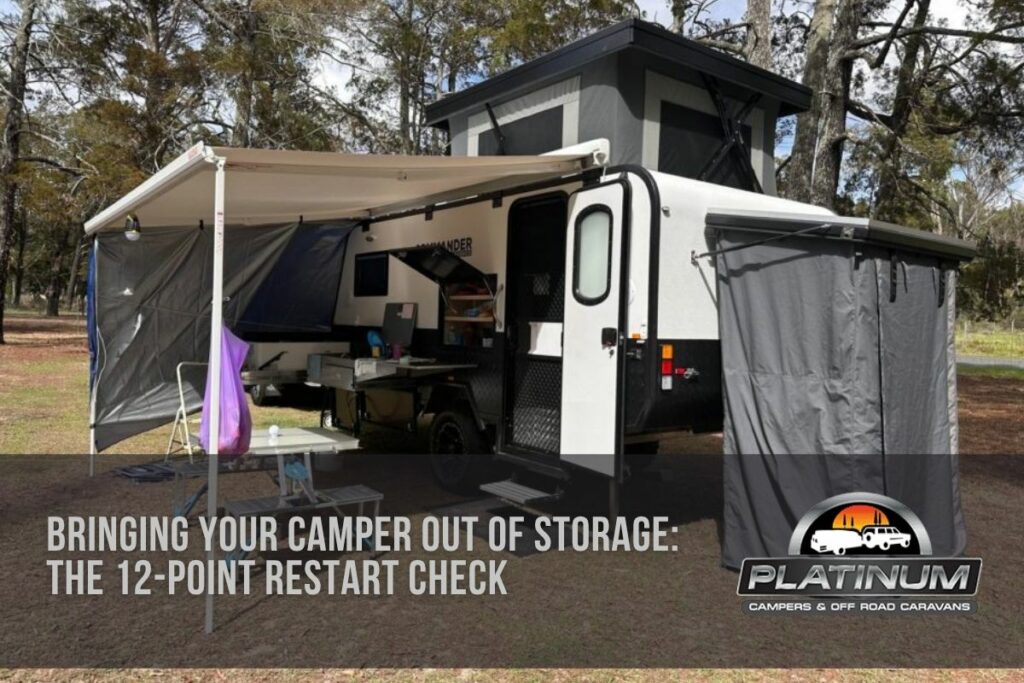
To bring your camper out of storage safely, complete a full restart inspection before you hitch up: check structure, tyres, brakes, hitch, lights, battery, water, gas, canvas, interior systems, undercarriage, then do a short road test. Skipping this step is one of the fastest ways to turn the first trip of the season into a breakdown or a failed safety check. Australian conditions are hard on stored gear. Heat, humidity, dust, rodents, UV and long periods of sitting still all take a toll on seals, canvas, electrics and wheel ends. Whether your unit is a soft floor, rear fold, forward fold, double fold or hybrid, a structured bringing your camper out of storage checklist gets you road-ready faster and with fewer surprises. This guide walks you through a practical 12-point restart process designed for Aussie camper trailers, with clear actions you can complete at home or at a storage yard before your first weekend away. Overview You will learn how to de-winterise or de-storage your camper trailer in a logical order, what to inspect on each system, when to stop and book a service, and how to pair this deep restart with a faster pre-trip routine. You will also find a scannable checklist table, packing and load tips, and FAQs that answer the most common restart questions. Key Takeaways Why a Restart Check Matters After Storage Storage protects your investment, but it does not pause wear. Rubber dries, grease settles, moisture finds seams, and small pests look for soft materials and wiring looms. A camper that looked perfect when you parked it can hide soft tyres, seized brakes, a depleted battery or a canvas leak by the time you return. A restart check is deeper than a roadside once-over. It is the bridge between long-term camper storage and trip-ready condition. Do it once at the start of the season (or after any long lay-up), then rely on a shorter routine such as a 10-minute pre-trip inspection before each departure. If you are still refining how and where you store the trailer between trips, practical layout ideas in creative camper trailer storage ideas can reduce damage risk before the next lay-up. Bringing Your Camper Out of Storage Checklist: The 12-Point Restart Work through the points in order. Fix or flag issues as you go. If a safety item fails (tyres, brakes, hitch, lights, gas), do not tow until it is rectified. 1. Full Exterior and Structural Walkaround Start unhitched, on level ground, with the handbrake on and wheels chocked if needed. Inspect the chassis rails, A-frame, drawbar, body panels, stone guard, toolboxes and fixings for rust, cracks, loose bolts, impact damage or elongated holes. Check door and hatch seals for compression set, mould or gaps. Look under edges and in corners for mud-wasp nests, rodent entry and chewed wiring. Confirm jockey wheel operation, clamp tightness and foot condition. Extend and retract stabiliser legs and confirm they lock cleanly. Sticky or bent legs are easier to deal with at home than on soft ground at camp. For ongoing care, see tips for using and maintaining stabiliser legs. Action list: 2. Tyres, Wheels and Torque Tyres are the highest-frequency failure point after storage. Sidewalls can crack, pressures drop, and flat spots can appear after months in one position. Check age and condition of all tyres including the spare. Look for cracking, bulges, uneven wear, embedded objects and damaged valves. Set pressures to the camper manufacturer’s cold recommendation for your load, then recheck after a short tow. Confirm wheel nuts are present and torqued to the correct specification, then re-torque after the first 50–100 km of the season if your service advice requires it. If the trailer sat on soft ground or soft tyres, inspect rims for corrosion at the bead. Spin each wheel (safely raised and supported) and listen for roughness that may point to bearing issues. Action list: 3. Brakes, Bearings and Handbrake Wheel ends suffer when a camper sits. Grease can settle, moisture can ingress and brake shoes can corrode to drums. With the trailer safely supported, check bearing play and noise. Service intervals vary by use and water crossings, so if you are due, book a bearing repack before the first big trip rather than after a roadside failure. Confirm electric brake function with a compatible controller, and test the breakaway system according to the unit’s design. Operate the handbrake and look for cable fray, seizure or excessive travel. Binding brakes after storage are common; a short controlled test in a quiet area helps you feel drag or pull early. For broader service timing guidance, read how often you should service an off-road camper trailer and general maintenance tips. 4. Hitch, Coupling, Chains and Safety Gear Your coupling is the connection that keeps the combination together. Inspect the hitch head, poly block or equivalent coupling, locking pins, lynch pins, safety chains, shackles and rated attachments on the A-frame. Confirm the tow vehicle receiver, tongue weight hardware and electrical socket are clean and serviceable. Practise the hook-up sequence before departure day so you are not learning under time pressure. Platinum owners can revisit how to use Platinum Campers hitches and essential hitch safety checks. Action list: 5. Lights, Plugs and Trailer Electrics Plug in the trailer connector and test indicators, brake lights, tail lights, number plate light and any clearance lamps. Wiggle the plug gently while testing to expose intermittent faults. Inspect the loom along the drawbar for chafing, poorly supported cable and corrosion in connectors. Clean contacts and apply an appropriate electrical protectant if needed. Confirm the Anderson plug path (if fitted) is clean and secure for charging on the move. A dedicated guide on Anderson plugs and 12V setups helps you verify charging behaviour after storage. 6. Battery, Charging and 12V Loads A stored camper often returns with a flat or sulphated battery, especially if it sat without a maintainer. Start here before you assume a fridge, pump or light has failed. Measure resting voltage, inspect terminals for
11 Questions to Ask Before Buying Your First Camper Trailer in 2025

Platinum Campers 11 Questions to Ask Before Buying Your First Camper Trailer in 2025 Purchasing your first camper trailer is an exciting milestone, but it’s also a significant investment. To ensure you make the best decision, it’s essential to ask the right questions. These article will guide you to the ideal camper trailer that fits your budget, needs, and lifestyle. Below, we’ve outlined the ten most important questions to ask before buying your first camper trailer in 2025. 1. What Is My Budget, and What Does It Cover? Before diving into the purchase, determine your total budget. Keep in mind that the initial cost of the camper trailer is just one aspect. You’ll need to factor in additional expenses, including: Insurance costs Registration fees Maintenance and repair costs Accessories and add-ons Towing vehicle upgrades (if necessary) By clarifying your financial limits, you can narrow down your options and avoid overspending. 2. What Type of Camper Trailer Suits My Lifestyle? Camper trailers come in various styles, each catering to different needs and preferences. Consider how you plan to use the trailer: Off-road adventures: Opt for rugged off-road camper trailers designed to handle rough terrains. Family trips: Look for spacious models with sleeping areas, a kitchen, and storage. Weekend getaways: Lightweight and compact camper trailers might be more suitable. Define your lifestyle needs to choose the perfect match. 3. What Is the Trailer’s Weight and Towing Capacity? Understanding the weight of the camper trailer is critical. It directly impacts your towing vehicle’s capacity and performance. Here’s what to check: Gross Trailer Mass (GTM): The maximum weight the trailer can carry. Tare Weight: The trailer’s weight when empty. Aggregate Trailer Mass (ATM): The total weight when fully loaded. Ensure your current towing vehicle can handle the trailer’s weight without compromising safety or performance. 4. What Are the Interior Layouts and Features? The interior design of the camper trailer can significantly affect your comfort during trips. Key aspects to consider include: Sleeping arrangements: Are there enough beds or sleeping areas for your group? Kitchen facilities: Does it include essentials like a stove, fridge, and sink? Bathroom options: Is there an onboard bathroom or a portable toilet? Storage solutions: Are there compartments for your gear and essentials? Evaluate the layout to ensure it meets your requirements. 5. How Easy Is the Camper Trailer to Set Up? Time and convenience are crucial, especially during short trips. Some camper trailers are quick to set up, while others require more effort. Questions to ask: How long does it take to set up and pack down? Is the setup process simple enough for one or two people? Are there automated systems or manual features? Choosing an easy-to-use camper trailer saves you time and energy on the road. 6. What Is the Trailer’s Build Quality and Durability? The construction of the camper trailer determines its lifespan and performance. Look for trailers built with high-quality materials, such as: Galvanized steel chassis for strength and corrosion resistance. Fiberglass or aluminum panels for lightweight durability. Reinforced suspension systems for off-road capabilities. Inspect for signs of poor craftsmanship, such as weak welds, misaligned panels, or cheap materials. 7. What Kind of Maintenance Is Required? Every camper trailer requires regular upkeep to stay in top condition. Ask the dealer about the recommended maintenance schedule, including: Checking tires and brakes Inspecting seals for water leaks Cleaning and servicing appliances Greasing wheel bearings Understanding maintenance needs upfront ensures you’re prepared for ongoing care. 8. Are There Warranty and After-Sales Support Options? A good warranty provides peace of mind, especially for first-time buyers. Confirm these details: Length of the warranty period What the warranty covers (e.g., parts, labor, appliances) Availability of service centers for repairs Additionally, check if the dealer offers after-sales support for troubleshooting and technical advice. 9. How Well Does It Hold Its Resale Value? Not all camper trailers retain their value over time. If you plan to upgrade in the future, it’s worth choosing a model known for its resale potential. Factors that affect resale value include: Brand reputation Condition and maintenance history Features and technology Investing in a high-quality camper trailer can pay off when it’s time to sell. 10. What Accessories and Add-Ons Are Available? Many camper trailers allow for customization with accessories and add-ons, such as: Solar panels for off-grid power. Additional awnings for shade and shelter. Upgraded water tanks for extended trips. Portable grills and outdoor kitchens. Ensure that the trailer you choose is compatible with the accessories you need for your adventures. 11. What Do Reviews and Testimonials Say About The Camper Trailer? Before purchasing any camper trailer, it’s crucial to understand how it performs in real-world scenarios. Reviews and testimonials from other buyers offer valuable insights into: Build quality: Are the materials durable and well-crafted? Ease of use: How simple is it to set up and tow? Customer service: Does the manufacturer provide reliable after-sales support? Long-term performance: Are there any recurring issues with the trailer? Reading both positive and negative reviews gives you a well-rounded view of what to expect. Testimonials from current owners often highlight details that aren’t immediately obvious, such as comfort during extended trips or performance in harsh weather conditions. Many dealerships and manufacturers like us also allow potential buyers to book a demo to experience the trailer firsthand. Pairing this hands-on opportunity with thorough research into reviews ensures you make the most informed decision possible. Read Our Reviews Here Your Buying Journey With Platinum Campers Choosing Platinum Campers for your first camper trailer purchase ensures a comprehensive and transparent buyer’s journey. A Trailer that Suits Your Lifestyle: Downloadable brochures are available, detailing how each camper suits different lifestyle needs. Weight and Towing Capacity: Our product pages list the weight and towing capacity of each camper, plus a link to check your vehicle’s towing capacity. Interior Layouts and Features: All features are detailed on our product pages, so you know exactly what you’re getting. Ease of Setup: Watch real-time setup videos to see how
How a Hybrid Camper Trailer Can Take Your Camping Experience to the Next Level

Hybrid camper trailers offer the best of both worlds, merging the lightweight design of pop-up campers with the luxury of caravans. With fold-out sections and off-road capabilities, these campers provide comfort and versatility, making them perfect for adventurous camping trips.
Best Camper Trailers Under $20000: Soft Floor and Hard Floor Campers

If you’re in the market for a camper trailer that combines affordability with quality, look no further. Platinum Campers offers a range of camper trailers under $20,000 that cater to both families and couples. Let’s explore these options, highlighting their specifications, features, and what makes them stand out.
How to Charge Your Camper Trailer: A Comprehensive Guide

Learn how to effectively charge your camper trailer using various methods, including 12v chargers, solar panels, and DC to DC chargers.
Hard Floor vs. Soft Floor Campers: Which is Right for You?

Embarking on the journey of buying a new camper trailer is exciting but can also be daunting. With so many options and considerations, it’s crucial to know what questions to ask to ensure you make the right choice. Platinum Campers brings you a comprehensive guide to help you navigate through this important decision.
Comparing the Chase S5 vs. Quest S4: Which Camper is Right for You?

Embarking on the journey of buying a new camper trailer is exciting but can also be daunting. With so many options and considerations, it’s crucial to know what questions to ask to ensure you make the right choice. Platinum Campers brings you a comprehensive guide to help you navigate through this important decision.
Top 12 Camper Trailer Campsites in Queensland

Embarking on the journey of buying a new camper trailer is exciting but can also be daunting. With so many options and considerations, it’s crucial to know what questions to ask to ensure you make the right choice. Platinum Campers brings you a comprehensive guide to help you navigate through this important decision.
How Long Do Camper Trailers Take to Setup? | Platinum Campers

Embarking on the journey of buying a new camper trailer is exciting but can also be daunting. With so many options and considerations, it’s crucial to know what questions to ask to ensure you make the right choice. Platinum Campers brings you a comprehensive guide to help you navigate through this important decision.
12 Best Questions to Ask When Buying a New Camper

Embarking on the journey of buying a new camper trailer is exciting but can also be daunting. With so many options and considerations, it’s crucial to know what questions to ask to ensure you make the right choice. Platinum Campers brings you a comprehensive guide to help you navigate through this important decision.